
Welcome back to Lambergg’s Insiders.
As we head into April, the news cycle is dominated by the upcoming April 15 tax deadline and the massive $3,571 average tax refunds hitting bank accounts. But tucked behind the headlines, the IRS just released new rules that directly impact how you save for your children and grandchildren.
Today, we are going to expose a massive legal trap hidden in the way 90% of American families pass money to the next generation.
Let's dive in.
LEGACY TIP OF THE WEEK
The New 2026 "Trump Accounts" for Children
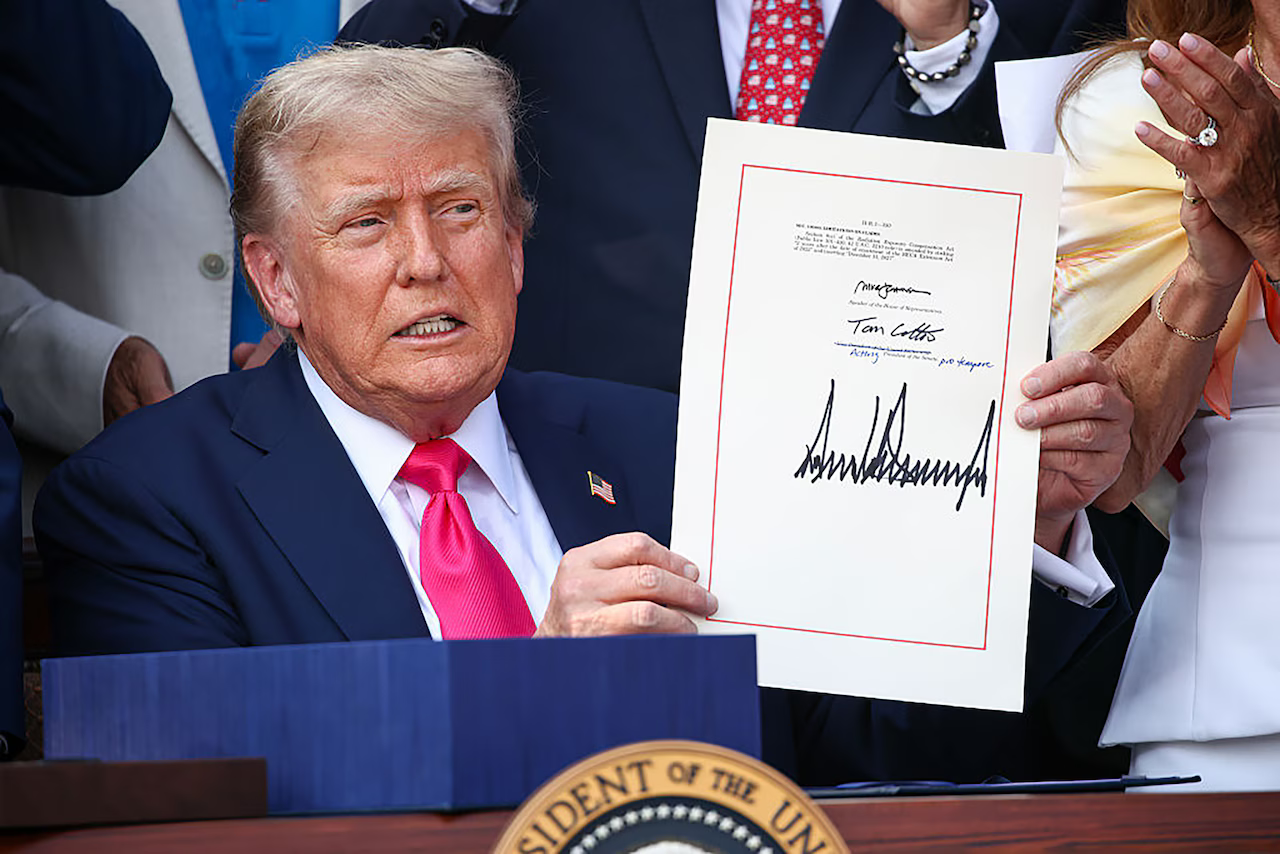
The federal government is introducing a brand-new way to save for minors. On March 9, 2026, the IRS released the official proposed rules for "Trump Accounts". Created by the recently passed One Big Beautiful Bill Act, these are new tax-favored savings accounts for children under the age of 18.
-
Anyone can start making contributions to a child's Trump Account on July 4, 2026.
-
You can contribute up to $5,000 per year (which will be subject to cost-of-living adjustments after 2027). Employers can also contribute up to $2,500 per year to their employees' dependents.
-
If you have a grandchild born between 2025 and 2028, the federal government may deposit a special $1,000 pilot contribution into their account if certain requirements are met.
Taxpayers will use the new IRS Form 4547 to establish these accounts. However, before you rush to the bank to open any account in a minor's name, you need to read today's Deep Dive.
Why Bank Accounts Destroy Financial Aid
When a grandparent or parent wants to save for a child's future, they usually walk into a bank and open an UTMA (Uniform Transfers to Minors Act) or UGMA custodial account.
It feels like the responsible thing to do. You deposit money every year, hoping to give them a head start on college or a house down payment. But placing significant assets directly in a minor's name is a structural disaster.
Here is why this well-meaning strategy backfires:
-
A custodial account is legally the child's money. You are just managing it for them. The day they turn 18 (or 21, depending on the state), the bank is legally required to hand them full, unrestricted access to the cash. You have zero say in how it is spent. They can use a $60,000 college fund to buy a depreciating sports car, and you cannot stop them.
-
When it comes time to apply for college, the Free Application for Federal Student Aid (FAFSA) severely penalizes assets held in the student's name. The formula expects the student to spend 20% of their assets on tuition, compared to only 5.6% of the parents' assets. A heavily funded UTMA account can instantly disqualify a middle-class family from receiving financial aid or grants.
-
Because the money is legally in the teenager's name, it is exposed to the teenager's liabilities. If your 19-year-old causes a catastrophic car accident and is sued, the plaintiff's attorney will find that UTMA account and seize it to pay the judgment.

You must separate the benefit of the wealth from the ownership of the wealth. Instead of using basic bank accounts, the wealthy set up a Lifetime Protection Trust (or a specific sub-trust inside their Bulletproof Trust) for their minors. The Trust owns the money. You (or a trusted Successor) act as the Trustee. You dictate exactly when and how the money is distributed (e.g., "Only for education, healthcare, or a first home"). The money remains completely invisible to the child's future lawsuits, divorces, and FAFSA aid calculations.
CASE STUDY
$85,000 Gap Year
A loving grandfather wanted to ensure his grandson, Michael, graduated from college debt-free. Over 18 years, the grandfather deposited money into an UTMA custodial account, growing it to $85,000.
Michael turned 18. He gained legal control of the account. Instead of using it for university tuition as intended, Michael decided he wanted to become a "crypto day trader" and take a gap year. He withdrew the entire $85,000.

(From a recent client review)
Within 8 months, Michael lost 90% of the funds in high-risk investments. The grandfather’s 18-year sacrifice was wiped out. Because it was an UTMA account, the grandfather had zero legal authority to block the withdrawal. If the grandfather had used a Trust with a "Staggered Distribution" clause (e.g., 25% at age 25, 25% at age 30), the money would have been safe from Michael's teenage impulsivity.
The $2 Million "Fast Track" to Generational Wealth
If the global news has you re-evaluating your financial defenses, you need to understand exactly how the 1% structure their wealth to survive and thrive, during economic chaos.
|

We recently sat down with Stoy Hall, CFP®, a wealth manager who builds "Modern Family Offices" for successful families. In this exclusive video interview, we expose the biggest lies the financial industry feeds the middle class.
We discuss:
-
Why the ultra-wealthy NEVER want to be "Debt-Free" (and why paying off your house during a crisis might be a massive mistake).
-
Why the "hustle mentality" is actually a barrier to your growth.
-
The secret to using high-level Life Insurance as a $2 Million "fast track" to guarantee generational wealth, regardless of what the stock market does.
If you want to stop thinking like a target and start thinking like a Family Office, you need to hear this conversation.
(Make sure to subscribe to the channel while you are there so you never miss an insider strategy session).
→ Click Here to Watch the Full Video ←
Minor Beneficiary Audit
Do not accidentally leave your life savings to a minor. Take 5 minutes to check these traps today:
-
[ ] Check your Bank PODs: If you have named a child under 18 as a "Payable on Death" beneficiary on your checking account, fix it immediately. Minors cannot legally inherit property. If you pass away, the court will freeze the money and force your family to hire an attorney to establish a formal Conservatorship.
-
[ ] Check your Life Insurance: Never name a minor child as the primary or contingent beneficiary of a life insurance policy. Name your Trust as the beneficiary instead, so the funds are managed properly.
-
[ ] Review existing Custodial Accounts: If you already have heavily funded UTMA accounts, speak with your attorney. You may be able to transfer those funds into a specialized Trust to restore protection.
FROM THE INBOX
Q: "I am using a 529 College Savings Plan for my granddaughter. Is that better than a custodial account?"
A: Yes, a 529 plan is significantly better than a standard UTMA account for two reasons:
First, you (the account owner) retain legal control of the money, not the child. If the child decides not to go to college, you can change the beneficiary to another family member (or even yourself). They cannot legally withdraw it to buy a sports car.
Second, under the new FAFSA simplification rules, grandparent-owned 529 plans are no longer reported as student income, meaning they do not penalize the child's financial aid eligibility. However, 529s are strictly limited to qualified education expenses. If you want to leave wealth for a house, a business, or life emergencies, an Irrevocable Trust is the ultimate vehicle.
HOW DID YOU LIKE THIS WEEK'S NEWSLETTER?
Your feedback helps us make this briefing even better.
If you found this intelligence valuable, please forward it to a friend or family member who needs to protect their legacy. We grow through your word-of-mouth.
Questions? Reply to this email or contact us at legalteam@lambergg.com
DISCLAIMER: This newsletter is for educational purposes only. Lambergg provides asset protection education, not legal advice. The information presented reflects general principles and may not apply to your specific situation. Tax laws, estate planning rules, and asset protection strategies vary by state and change frequently. Always consult with a qualified attorney and tax professional for advice tailored to your individual circumstances. Nothing in this briefing should be construed as creating an attorney-client relationship.
YOUR TURN
How are you currently saving for your children or grandchildren?
Are you using a basic savings account, a 529, or a Trust?
Reply directly to this email and let me know. I read every single response personally, and it helps me understand exactly what strategies you need us to cover next.
Until next time, protect what matters.
The Lambergg Team