
Welcome back to Lambergg’s Insiders.
Today, we are tackling the most devastating threat to middle and upper-middle-class wealth in America: The cost of long-term care.
Let's dive in.
LEGACY TIP OF THE WEEK
The "Safe Deposit Box" Catch-22
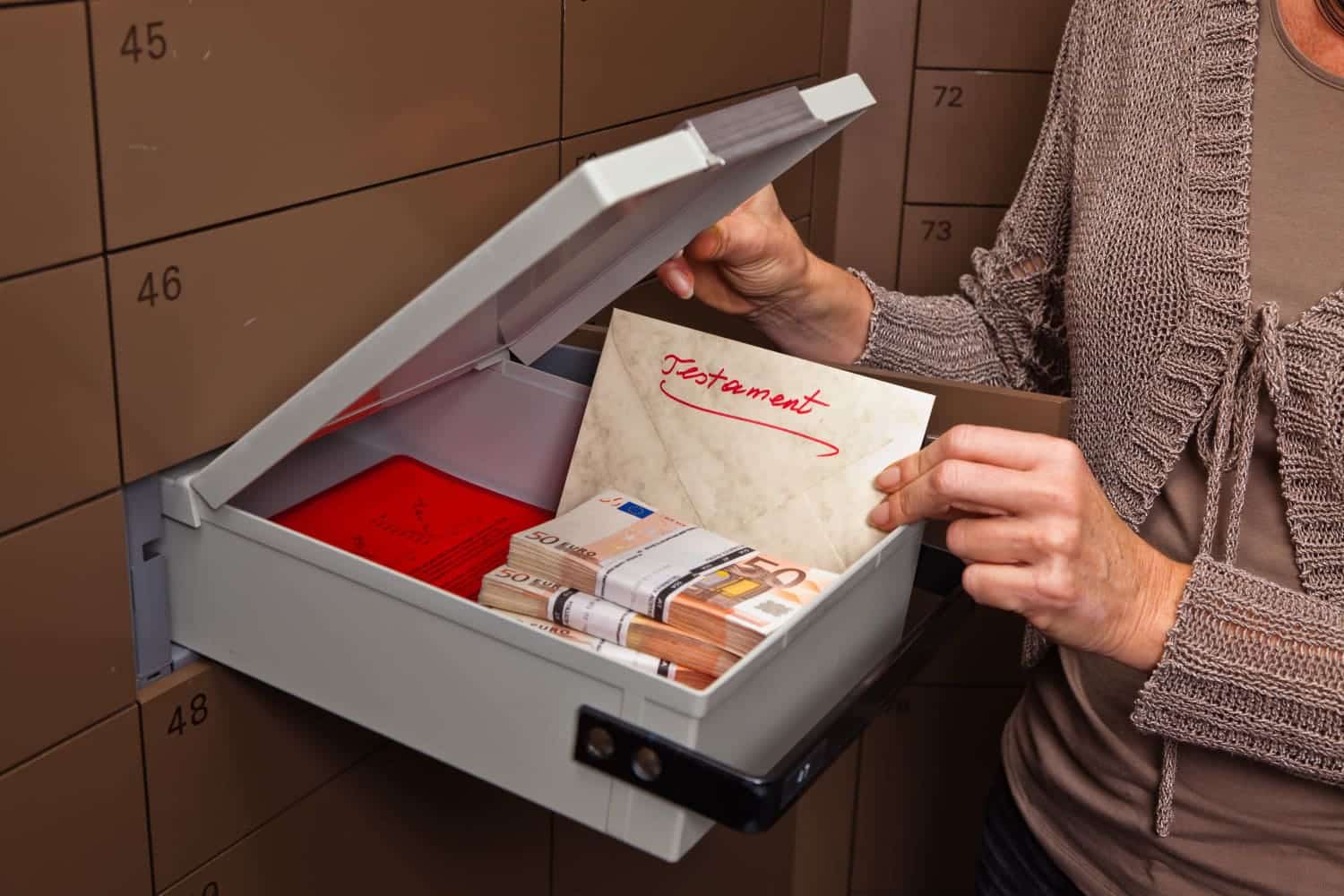
Many families who rely on a standard Last Will and Testament lock the original document inside a bank safe deposit box for safekeeping. This is a massive trap. If you pass away, the bank is legally required to freeze the box. Your Executor will go to the bank to retrieve the Will, but the bank manager will say: "I cannot open this box unless you show me the Letters Testamentary from the probate court proving you are the Executor." But to get those letters from the court, your family needs... the original Will. It is a bureaucratic Catch-22 that can take months and thousands of dollars in attorney fees to resolve.
Temporary Fix: If you currently only have a Will, get it out of the bank box today. Put it in a fireproof safe at home and tell your family where it is.
"This entire nightmare only exists because a Will guarantees your family must go through the Probate Court system. When you upgrade to a Bulletproof Trust, your assets bypass probate completely. Your Successor Trustee steps in instantly upon your passing, no court orders, no frozen bank accounts, and no begging a bank manager for access to your own family's legacy."
The 60-Month Medicaid Trap
Here is a financial shock that catches millions of families off guard: Medicare does not pay for long-term custodial care (like a nursing home).
If you or your spouse needs to move into a nursing home, you are generally expected to pay out of pocket. In 2024/2025, the national average cost for a private room in a nursing home was over $108,000 per year, with states like New York averaging closer to $146,000 to $176,000 annually.
When a family runs out of money, they turn to Medicaid, the government program that does pay for nursing homes.
But Medicaid requires you to be functionally broke to qualify (usually holding less than $2,000 in countable assets).
You might think: "I’ll just give my money and my house to my kids right before I go into the nursing home, so on paper, I am broke." Medicaid anticipated this. When you apply, they look back at every financial transaction you made over the last 60 months (5 years). If they see you transferred a $500,000 house or gifted $50,000 to a grandchild during that 5-year window, they will penalize you. They will refuse to pay for your nursing home care for months, or even years, depending on the size of the gift.

You cannot wait until you are sick to protect your house. If you transfer your home into a properly structured Medicaid Asset Protection Trust (MAPT) while you are healthy, the 60-month clock starts ticking. Once 5 years and 1 day have passed, that house is entirely invisible to Medicaid and completely safe from Estate Recovery.
CASE STUDY
The "Caregiver Child Exemption" (The Ultimate Loophole)
What happens if you didn't plan 5 years in advance? What if you need care today? Is the house gone? Not necessarily. There is a powerful, perfectly legal federal loophole called the Caregiver Child Exemption.

Margaret (81) suffered a severe stroke and needed to move into a nursing home immediately. She owned a $600,000 home. She had not set up an Irrevocable Trust. Under normal rules, Medicaid would eventually force the sale of the home to recoup their costs through the Medicaid Estate Recovery Program (MERP).
For the three years prior to her stroke, Margaret's biological daughter, Lisa, had moved into the house to take care of her. Lisa cooked, helped her mother bathe, and managed her medications.
Because Lisa lived in the home for at least two continuous years immediately prior to the nursing home admission, and provided care that delayed Margaret’s need for a facility, Margaret was legally allowed to transfer the deed of the house directly to Lisa.
The $600,000 home transfer completely bypassed the 5-year look-back penalty. Lisa kept the family home, and Margaret immediately qualified for Medicaid.
To use this exemption, you must have an ironclad paper trail. You need to prove the child's residency (driver's license, tax returns, utility bills at that address), and you absolutely need a written statement from a doctor confirming that the child's daily care is what kept you out of the nursing home for those two years.
Not sure if this structure fits your situation? Every family is different. What works for a married couple in Texas looks different from a widow in New York or a business owner in California.
If you want to talk through how this might apply to your specific circumstances, we offer a free 45-minute clarity call with an asset protection specialist. Just answers to your questions and a clear sense of whether this path makes sense for you.
→ Schedule Your Free Clarity Call ←
What to Ask Your Family This Week
Do not wait for a medical emergency to figure out your long-term care strategy. Ask your spouse or adult children these three questions this weekend:
-
[ ] "Do we have Long-Term Care Insurance?" (If you do, verify exactly what the daily payout limit is and how long the benefit period lasts. Many older policies max out after 3 years).
-
[ ] "Is our house currently in a Revocable or Irrevocable Trust?" (Remember: A Revocable Living Trust avoids probate, but it offers ZERO protection against Medicaid. Only an Irrevocable Trust or Bulletproof Trust starts the 5-year protection clock).
-
[ ] "Who is our designated Healthcare Proxy?" (If you cannot speak for yourself, who has the legal authority to talk to the doctors and the nursing home administration? Ensure this document is updated and your proxy has a physical copy).
FROM THE INBOX
Q: "Can I just withdraw $9,000 in cash every month and hide it in a safe before I apply for Medicaid?"
A: Absolutely not. This is a federal crime (fraud), and it does not work. Medicaid requires you to submit 60 months of bank statements when you apply. If an auditor sees consistent, large cash withdrawals, they will flag them as "uncompensated transfers." Medicaid will assume you gifted that money away, and they will apply a severe penalty period where they refuse to pay for your care. Never try to "hide" money from the government. Use legal, transparent Trust structures to protect it instead.
HOW DID YOU LIKE THIS WEEK'S NEWSLETTER?
Your feedback helps us make this briefing even better.
If you found this intelligence valuable, please forward it to a friend or family member who needs to protect their legacy. We grow through your word-of-mouth.
Questions? Reply to this email or contact us at legalteam@lambergg.com
DISCLAIMER: This newsletter is for educational purposes only. Lambergg provides asset protection education, not legal advice. The information presented reflects general principles and may not apply to your specific situation. Tax laws, estate planning rules, and asset protection strategies vary by state and change frequently. Always consult with a qualified attorney and tax professional for advice tailored to your individual circumstances. Nothing in this briefing should be construed as creating an attorney-client relationship.
What is your biggest worry regarding your retirement and inheritance right now?
Is it the cost of a nursing home? Family disputes? Or stock market volatility?
Reply directly to this email and let me know. I read every single response personally, and your answers dictate exactly what we research for next week's briefing.
Until then, sleep well and protect what matters.
The Lambergg Team